


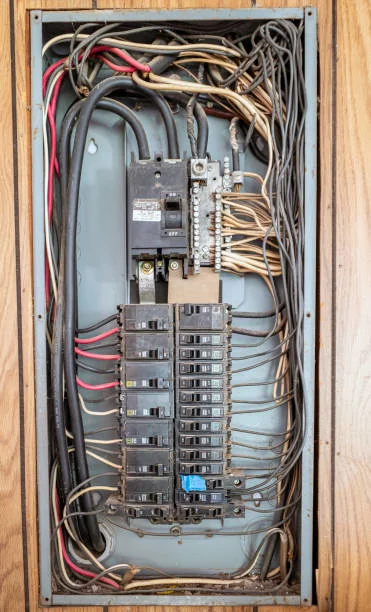
A newer electrical panel can sit at the center of an older electrical system. Behind finished walls, above ceilings, and inside attic spaces, original branch wiring may still supply outlets and lights long after a panel replacement. Most homeowners have no idea it’s there.
That distinction matters for anyone researching old home electrical wiring in Summerville properties. Air conditioning, kitchen appliances, chargers, and computers place demands on circuits that weren’t designed for modern use. Since 2011, Charleston Electric & Air has helped homeowners in Summerville, SC, understand what’s actually in their walls, without assuming every older home needs a complete rewire.
Knob and tube wiring, cloth-insulated cable, and aluminum branch circuit wiring each have different construction, different warning signs, and different paths forward. Identifying what’s present is the first useful step.
Why Older Wiring Can Still Be Hidden in a Working Home
Lights turning on and breakers staying closed don’t confirm that every wire in a home is current, grounded, or suited to present-day demand. A panel may have been replaced to add breaker capacity while the circuits running through walls and ceilings stayed exactly where they were.
Older wiring often comes to light during a home purchase, renovation, insurance review, or an effort to add a major appliance. It can also surface after flickering lights, a warm outlet cover, a breaker that trips repeatedly, or a room that doesn’t have enough usable outlets.
A grounding conductor provides a controlled path for fault current, helping protective devices respond to certain electrical faults. Some older systems lack this conductor entirely, which affects how modern three-prong outlets and connected equipment are protected.
How to Recognize Knob & Tube Wiring
Knob and tube wiring uses individual insulated conductors instead of a single cable. Ceramic knobs secure wires to framing, while ceramic tubes protect them where they pass through wood. In an accessible attic or unfinished area, look for:
Separate cloth-like wires running several inches apart.
Small white ceramic knobs attached to framing.
Ceramic tubes around wires passing through wood.
Wiring without a grounding conductor.
Three-slot outlets elsewhere in the home don’t guarantee that every circuit is grounded.
Avoid pulling, bending, or altering suspected knob and tube wiring. Deteriorated insulation, previous modifications, and insulation added around conductors can create safety concerns.
A home electrical inspection can evaluate wiring condition, connections, circuit loading, and previous modifications. Modern appliances, such as window air conditioners and countertop equipment, may overload older circuits, causing breaker trips or excessive heat buildup.
What Cloth & Aluminum Wiring Look Like
Cloth-insulated cable differs from knob and tube because its conductors are grouped inside a cable-style covering. The outer jacket may look woven, braided, or fabric-like, particularly where it enters an electrical box, fixture, or panel. This cable can become brittle with age; the covering may crack, fray, or pull away near light fixtures, switches, receptacles, and panel entries. Some cloth-covered cable also lacks a grounding conductor. Because appearance alone can be misleading, don’t rely on an outlet cover or a visible cable segment to determine whether a circuit is grounded or suitable for present use.
Aluminum branch circuit wiring uses aluminum conductors to serve individual household circuits. It may be visible at the panel, in accessible junction boxes, or at device boxes, but safely identifying the conductor material and connection condition requires an electrician. Aluminum expands and contracts more than copper as it heats and cools, and at connection points, that movement can lead to oxidation, problems with incompatible devices, or loose connections that increase resistance and generate heat. The condition of terminations matters as much as the wiring material itself. For homeowners evaluating old wiring in Summerville, aluminum branch circuit wiring doesn’t automatically mean whole-home replacement is the only option. The right response depends on where it’s installed, how connections were made, the wiring’s condition, and what work the home needs going forward.
Warning Signs That Warrant Prompt Attention
Some symptoms shouldn’t wait for a scheduled visit:
- Warm Switches or Outlets: Covers, switches, or receptacles that feel warm during normal use can indicate heat at a connection.
- Discoloration or Odor: Brown marks, melted plastic, scorching, or a burning smell can signal heat damage.
- Buzzing or Flickering: Persistent buzzing, dimming, or flickering may point to a loose connection, a circuit issue, or a fixture problem.
- Repeated Breaker Trips: A breaker that trips repeatedly may be responding to an overloaded circuit, a fault, or failing equipment.
If you can do it safely, turn off power to the affected area and stop using the device until it’s been looked at. A breaker that trips is doing its job. Repeatedly resetting it without finding the cause can turn a minor issue into a serious one.
It’s also worth thinking ahead. A kitchen update, additional HVAC equipment, electric vehicle charging, workshop tools, or a generator installation can all change the capacity and circuit layout a home needs. What works today may not be adequate once those projects are underway.
What an Electrical Evaluation Actually Tells You
An evaluation gives homeowners the information needed for a specific decision, whether that involves a renovation, an insurance question, a recurring symptom, or a planned load addition. It isn’t a predetermined recommendation for whole-home rewiring.
During an assessment, our technicians can review the electrical panel, accessible attic or crawl space wiring, device boxes, visible splices, grounding path, circuit condition, and signs of heat damage. Finished walls limit what can be seen without additional investigation, but accessible findings can clearly direct the next step.
Recommendations can range from monitoring a sound installation to targeted repairs, aluminum wiring remediation, new dedicated circuits, replacement of damaged sections, or whole-home rewiring. Aluminum wiring remediation means correcting connection methods using materials and procedures appropriate for aluminum conductors, not treating every aluminum-wired circuit the same way.
Before the visit, it helps to gather any inspection reports, renovation records, and details about recurring symptoms. Those records can show where prior work occurred and help us focus the assessment on circuits that need closer attention.
Start with What’s Actually in Your Walls
The presence of knob and tube wiring, cloth-insulated cable, or aluminum branch circuit wiring is a reason to understand the system, not proof that a full replacement is required. Condition, grounding, load demand, accessible connections, and planned changes all shape the appropriate scope of work.
Charleston Electric & Air can assess the old wiring in your home and explain the findings clearly. We offer emergency and weekend service, and estimates for electrical installations are free; all repairs are backed by a one-year warranty. Call us at (843) 258-8699 to discuss an electrical concern or schedule an evaluation.